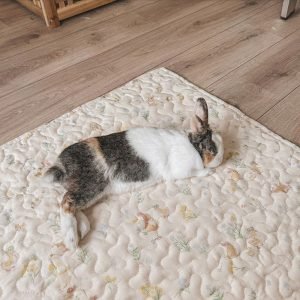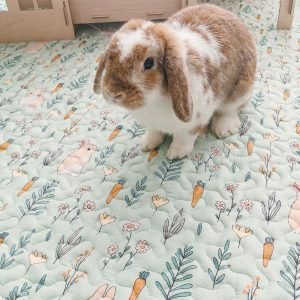
Rabbit hay feeder
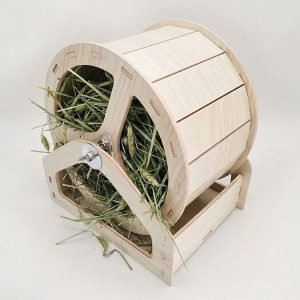
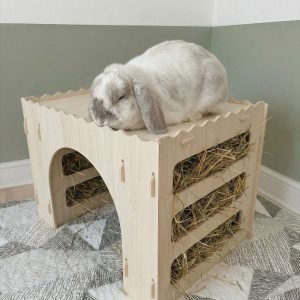
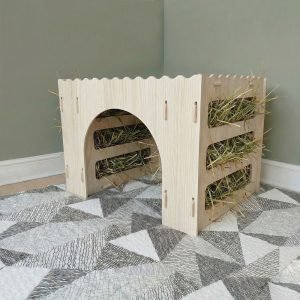
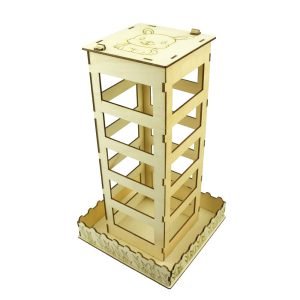
Shop rabbit hay feeders and hay racks in hanging, freestanding, fabric, plastic, wooden and enrichment-style designs. This collection includes baskets, bags, towers, a wheel rack and a rabbit house with built-in feeder panels.
Choose by attachment, opening size, feeding height, materials and cleaning method. A feeder can keep part of the hay contained, but rabbits should also have constant access to fresh, dust-free hay or grass from an easy and natural feeding position.
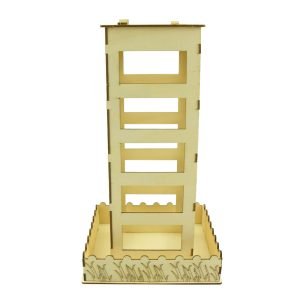
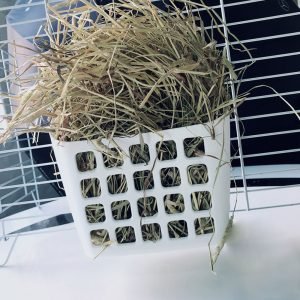


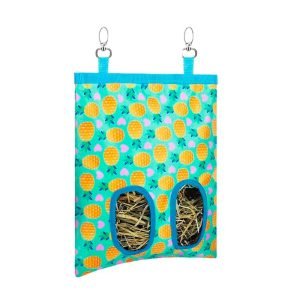
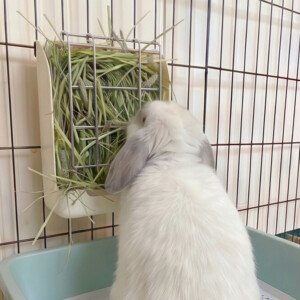
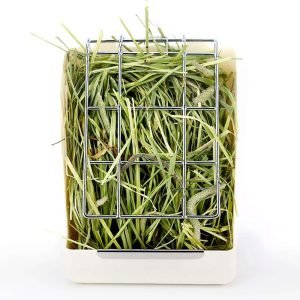
How to Choose a Rabbit Hay Feeder
The right rabbit hay feeder depends on the living-area setup, your rabbit’s chewing habits and how easily every rabbit can reach the hay. Compare freestanding towers, hanging baskets, fabric bags, clamp-on feeders and enrichment-style designs. A feeder should make hay accessible without forcing your rabbit to stretch or place its head, neck or legs inside unsafe openings.
| Type | Best for | Main benefit | Daily / Safety check |
|---|---|---|---|
| Hanging hay basket | Enclosures with suitable bars | Keeps a portion of hay in a defined feeding area | Check hooks, opening size, attachment and feeding height |
| Wooden hay feeder tower | Freestanding indoor setups | Stable feeding point without enclosure-bar attachment | Inspect stability, openings, wooden edges and chewing damage |
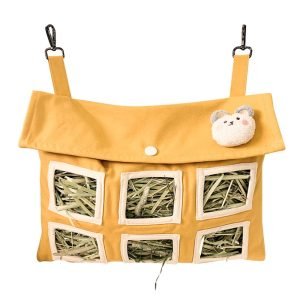
| Fabric hay feeder or hanging hay bag | Lightweight hanging setups | Flexible storage with front feeding openings | Inspect fabric, seams, hooks and openings before every refill |
| Clamp-on plastic feeder | Barred pens with a compatible attachment point | Rigid, washable feeding container | Check the clamp, plastic edges, height and signs of chewing |
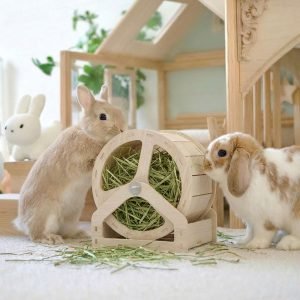
| Rabbit hay wheel rack | Supervised forage-style feeding | Adds movement and exploration to part of the hay supply | Check that the wheel moves safely and cannot trap toes, fur or nails |
| Rabbit house with hay feeders | Setups combining hiding, feeding and a lookout surface | Multiple functions in one wooden structure | Check feeder access, stability, entrances, roof and wooden edges |
Rabbit Hay Feeder Safety Checks
- Keep fresh, good-quality and dust-free hay or grass available at all times.
- Do not rely on a hay feeder as the rabbit’s only source of hay.
- Provide additional loose hay at floor level so your rabbit can eat in a natural head-down position.
- Supervise the first uses of every new feeder.
- Check that openings cannot trap your rabbit’s head, neck, legs, toes or nails.
- Position the feeder where hay can be reached without excessive stretching.
- Make sure hooks, clamps and hanging straps cannot loosen or become accessible for chewing.
- For multiple rabbits, make sure every rabbit can access hay without competition.
- Do not pack hay so tightly that strands become difficult to remove.
- Check every day that the openings remain clear and enough fresh hay is available.
- Remove damp, dusty, discolored or mouldy hay immediately.
- Inspect fabric, plastic and wooden parts for damage before each refill.
- Clean the feeder according to its materials and let it dry completely before adding fresh hay.
A feeder may be positioned safely near a rabbit litter box, provided it does not block entry or force an awkward feeding posture. Fresh water must also remain continuously available through a suitable rabbit water bowl, bottle or dispenser.
Rabbit Hay Feeders FAQ
Does a rabbit hay feeder replace loose hay?
No. A feeder can hold part of the hay supply, but rabbits should also have easy access to fresh hay or grass from a natural feeding position. Check several times a day that enough suitable hay remains available.
Which type of rabbit hay feeder should I choose?
Choose according to the setup and your rabbit’s habits. Hanging baskets and clamp-on feeders require compatible enclosure bars. Freestanding towers need a stable surface. Fabric bags require close monitoring if your rabbit chews textiles, while enrichment-style feeders should initially be supervised.
How high should a bunny hay feeder be placed?
Place it low enough for your rabbit to pull hay comfortably while keeping all four feet on the floor. Avoid positions that force repeated upward stretching or allow hay dust to fall directly into the eyes or nose.
Are fabric and wooden hay feeders safe for chewers?
Safety depends on the product and the rabbit’s chewing habits. Inspect fabric, seams, hooks, wooden edges and fastenings regularly. Remove the feeder if chewing creates loose fibres, sharp edges, splinters or detachable pieces.
How often should a rabbit hay feeder be refilled and cleaned?
Check and refill hay every day and whenever the accessible supply becomes low. Remove old, damp, dusty or soiled hay rather than continually topping it up. Clean the feeder as required for its material and allow it to dry fully before refilling.